
For many homeowners, the baseline mechanical hum echoing from a residential basement is a comforting sign that their house is actively protecting itself from structural water damage. Nestled safely below your concrete flooring, the sump pump acts as a silent sentry, keeping subterranean water tables from breaching your foundation walls. However, that comforting mechanical hum can rapidly transform into an anxious source of stress when you realize it simply will not turn off.
A sump pump that runs continuously—whether it is a beautifully dry August afternoon or a saturated morning during a chaotic New England weather shift—is far more than a minor background nuisance. It is an urgent mechanical cry for attention. Left unresolved, a non-stop pump will burn out its electric motor, exponentially spike your month-to-month utility bills, and ultimately leave your home totally unprotected against the next major storm or localized power outage.
If you are currently down in your basement staring anxiously into a vibrating pit, this exhaustive diagnostic guide is built explicitly for you. Below, we break down exactly how your sump system works, analyze the five most common reasons why it refuses to shut down, provide step-by-step troubleshooting measures you can safely attempt at home, and outline when it is time to call in the licensed plumbing professionals.
Anatomy of a Sump System: How It is Supposed to Work
Before diving into what goes wrong, it is vital to fundamentally understand how a normal, healthy system handles incoming groundwater. A standard residential home layout relies on a deeply integrated relationship between several structural and mechanical components:
The Sump Basin (or Pit): A structural plastic, fiberglass, or concrete pit carved directly into the lowest point of your basement floor. It is designed to act as a catchment basin for groundwater collecting around your foundation perimeter drain tile (French drain system).
The Pump Unit (Submersible or Pedestal): The core mechanical engine. Submersible pumps sit entirely at the bottom of the basin, sealed away from moisture, while pedestal models place their electric motor high above the water line on a rigid shaft.
The Float Switch: The brain of the unit. This component measures the water levels in the basin. As the water level rises, the float elevates like a buoy in a harbor until it hits a pre-set apex, closing an electrical circuit and triggering the motor to activate. Once the water level drops back down to a safe threshold, the float falls, breaks the connection, and safely deactivates the system.
The Check Valve: A critical one-way mechanical gate installed directly onto your vertical discharge line. This valve permits water to freely exit your home but instantly snaps shut when the pump stops, blocking that same column of wastewater from sliding right back down into the basin under the weight of gravity.
The Discharge Line: A system of rigid PVC piping that safely routes pumped water upward, outward through your home’s rim joist, and far away from your foundation wall to a designated drainage zone.
A Note on Continuous Duty Cycles: Sump pumps are engineered for intermittent cycles—turning on briefly to clear water, then resting. When a pump runs for hours or days without a break, its moving components undergo immense friction and thermal stress, dramatically shortening its overall operational lifespan.
The Top 5 Reasons Your Sump Pump Won’t Shut Off
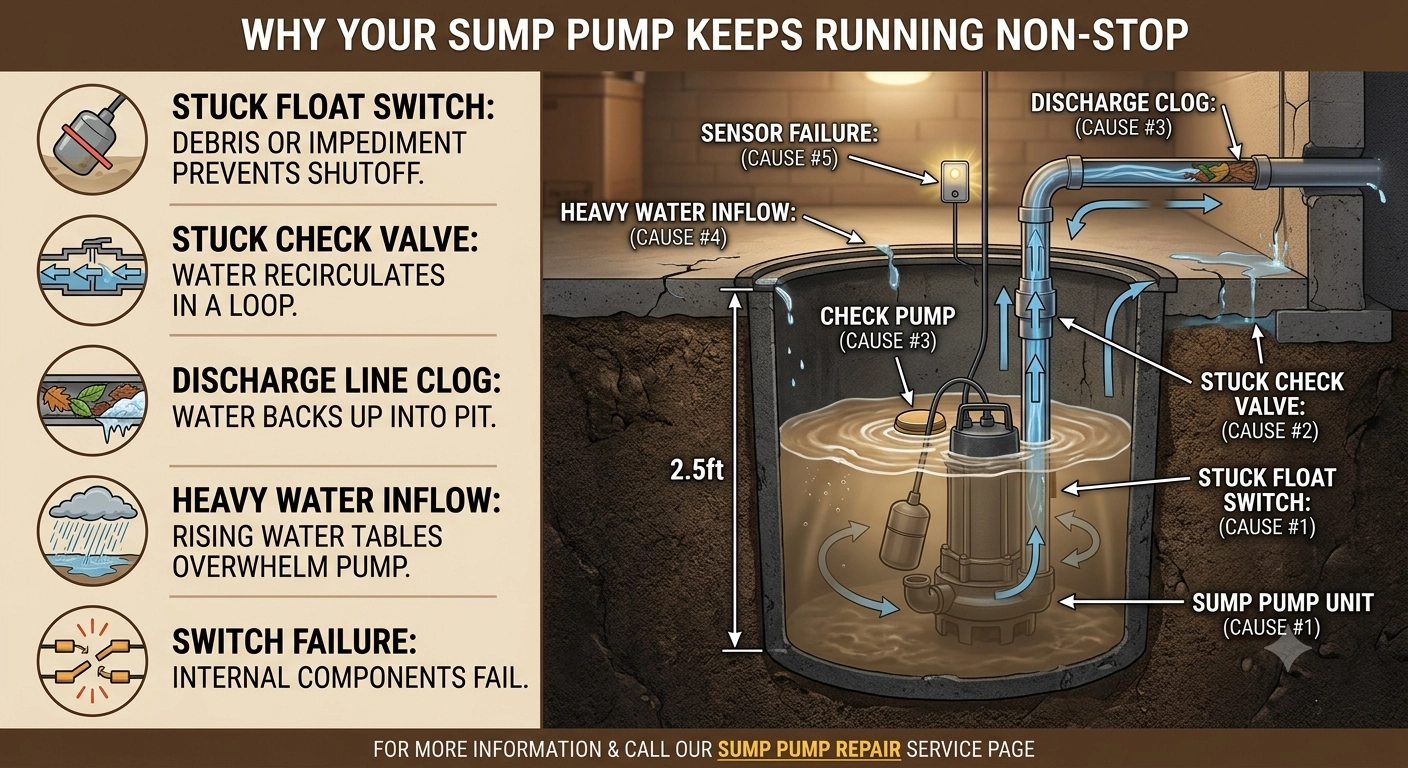
When a sump pump refuses to stop running, the problem can almost always be categorized into one of five baseline mechanical or environmental failures. Let’s systematically walk through each cause so you can isolate what is happening in your home.
1. A Stuck, Tangled, or Blocked Float Switch
By far, the single most frequent culprit behind an endlessly cycling pump is a compromised float switch. Because the basin is designed to collect raw groundwater, it acts as a magnet for silt, debris, small stones, and foundation residue. Over months and years of constant operation, this grit can coat the floating mechanism, making it heavy, brittle, or completely stuck in the upward “on” position.
Furthermore, because submersible pumps vibrate noticeably while operating, the entire heavy unit can gradually migrate across the rough bottom of a plastic or concrete basin. If the pump shifts even a few inches, the float switch can become wedged directly against the rigid corrugated walls of the pit. Unable to physically drop back down as the water recedes, the switch remains mechanically jammed in the active position, telling the internal motor to keep spinning indefinitely—even when pumping nothing but empty air.
2. A Failed or Broken Check Valve
Your pump might be running continuously because it is trapped in a completely endless loop of recycling the exact same water. This structural loop occurs when the internal spring or rubber flap inside your discharge line’s check valve wears down, cracks, or gets jammed open by a rogue piece of debris.
When the check valve fails, the pump will successfully activate, clear the basin, and push gallons of water up into the vertical PVC line. However, the moment the motor stops, the check valve fails to seal. Gravity takes over, and the entire volume of water still trapped inside that vertical pipe drains straight back down into the pit. The water level immediately spikes back up, the float switch lifts, the pump turns back on, and the exhausting cycle repeats itself indefinitely every 60 seconds.
3. An Overwhelmed Sump Pit (High Water Inflow)
Sometimes, a continuously running pump isn’t experiencing a mechanical malfunction at all—it is simply fighting a losing war against sheer physics. During periods of torrential New England rainfall, sudden winter snowmelt, or if your property sits atop a naturally high water table, water can enter your perimeter drain tile significantly faster than your pump’s motor is capable of displacing it.
If you have an underpowered pump (such as a 1/4 horsepower unit when your foundation demands a 1/2 horsepower model), the unit will run at maximum capacity for hours on end just trying to maintain equilibrium. While it prevents your basement from flooding, it will run continuously until the external environmental water table naturally begins to recede.
4. A Completely Clogged or Frozen Discharge Pipe
If your pump’s motor is whirring loudly but the water level inside the basin isn’t dropping a single fraction of an inch, your system is likely fighting against a major blockage down the line. In the dead of winter, shallowly buried exterior discharge lines can easily freeze solid, creating an unyielding ice plug inside the PVC pipe.
During the spring and autumn months, that same line can become completely packed with tree roots, leaves, lawn mulch, or even small burrowing rodents that have crept inside the open discharge terminal. When the pathway out of your house is blocked, the pump works tirelessly against a closed system, unable to lower the water level enough to drop the float switch and cut power to the motor.
5. Normal Mechanical Aging and System Burnout
Like every residential appliance, sump pumps have a definitive operational lifespan. A high-quality, professionally maintained submersible pump generally lasts between 7 to 10 years. Over time, internal seals wear out, electrical impellers lose their efficiency, and the internal switch contacts can physically fuse together due to repeated electrical arcing.
When internal components age out, the pump loses its hydraulic efficiency. It might still spin and hum, but it can no longer generate the necessary pressure (known as head height) to push water all the way up and out of your basement. It simply churns the water in place, running forever until it ultimately suffers catastrophic electrical failure.
🛠️ Worried Your Sump Pump is On the Verge of Total Failure? Don’t wait for your basement to flood during the next big storm. Reach out to the certified drainage specialists at Akian Plumbing today for reliable, comprehensive system diagnostics.
Step-by-Step Homeowner Troubleshooting Guide
If you discover your pump running non-stop, you can systematically troubleshoot the system using these four safe, step-by-step checks before picking up the phone to call for backup:
Perform a Visual Float Check: Peer directly into your sump basin. Is the pump sitting crooked? Is the float switch pressed tightly against the side wall of the pit? Take a long, non-conductive wooden broom handle or wear a pair of heavy rubber safety gloves, and gently tap or nudge the pump back into a centered position. If the float drops down and the motor immediately cuts off, you have successfully isolated the issue. You may need to clean away debris or steady the unit to prevent it from shifting again.
Inspect the Water Direction: Look closely at the water inside the basin while the motor is humming. Is the water level actually dropping, or is it swirling violently in place? If it is swirling but not dropping, turn off power at your main breaker panel or unplug the unit instantly. Check your exterior discharge pipe outlet to see if it is buried under a snowbank, frozen solid, or visibly packed with mud and autumn leaves.
Listen Closely to Your Check Valve: Unplug your sump pump from its dedicated GFCI wall outlet. Listen intently for the next 10 seconds. Do you hear a massive rush of rushing water splashing straight back down into the basin? If so, your check valve is completely failed or blocked open. A healthy check valve should yield absolute silence once power is disconnected.
Test the Electrical Integrity: Many modern sump pumps utilize a specialized “piggyback” plug configuration, where the pump’s power cord plugs directly into the back of the float switch plug, which then plugs into the wall. Unplug the entire assembly, separate the two cords, and plug the pump cord directly into the wall outlet on its own. If it runs instantly, the motor is healthy, but the float switch circuit has likely failed internally and needs full replacement.
Quick Reference: Troubleshooting Summary
| Symptom Observed | Most Likely Root Cause | Recommended Immediate Action |
| Pump runs, basin is dry, float is up. | Stuck / jammed float switch. | Center the pump; clear debris around the float mechanism. |
| Pump turns off, then instantly turns back on. | Failed or leaking check valve. | Inspect valve flap; replace old check valve assembly. |
| Motor runs loudly, but water level stays flat. | Clogged or frozen discharge pipe. | Clear exterior outlet; thaw frozen lines safely. |
| Pump runs constantly during heavy, prolonged storms. | Underpowered or overwhelmed system. | Upgrade to a higher horsepower pump or install a backup. |
When to Call a Professional Plumber
While clearing a jammed float or cleaning out leaves from a discharge line terminal are completely manageable DIY projects, many sump pump issues require specialized diagnostic tools, licensing, and professional plumbing expertise. You should definitely reach out to a licensed professional if:
The System Involves Advanced Electrical Wiring: If your pump is hardwired directly into an electrical panel rather than utilizing a standard wall outlet, attempting DIY repairs presents a severe risk of electrocution.
The Internal Switch Circuit Has Blown: Replacing an internal electronic switch mechanism or swapping out an integrated impeller motor requires deep technical knowledge and specialized manufacturer parts.
You Need an Upgrade in Motor Horsepower: Calculating the exact gallons-per-minute (GPM) requirements and matching them against the dynamic head height of your home’s unique layout requires professional hydraulic calculations.
You Want a Redundant Battery Backup System Installed: To achieve absolute peace of mind during severe weather, a professional should cleanly integrate a secondary, battery-powered backup pump alongside your primary system. This ensures your basement stays completely dry even if a major storm knocks out your neighborhood’s electrical grid.
Conclusion: Protect Your Investment
Your home’s basement represents an incredibly massive financial investment—it houses your foundational structure, your major utility systems, and often holds priceless personal belongings. A sump pump that runs continuously is a critical early warning sign that your main line of defense against groundwater is on the verge of burning out entirely.
By taking the time to systematically walk through these troubleshooting steps, you can catch minor issues like stuck floats or failing valves before they turn into full-blown basement flooding emergencies. If you find yourself unsure of the next steps, or if your system is reaching the end of its natural operational life, don’t leave your property’s safety up to pure chance.
📞 Get Expert Sump Pump Solutions Today
The experienced team at Akian Plumbing, Heating & Electrical has spent years helping New England homeowners protect their basements from water damage. From minor check valve replacements to full pump upgrades and battery backup installations, we do it right the first time.
Contact Akian Plumbing Online or Call (617) 894-7803 for Fast, Professional Service