
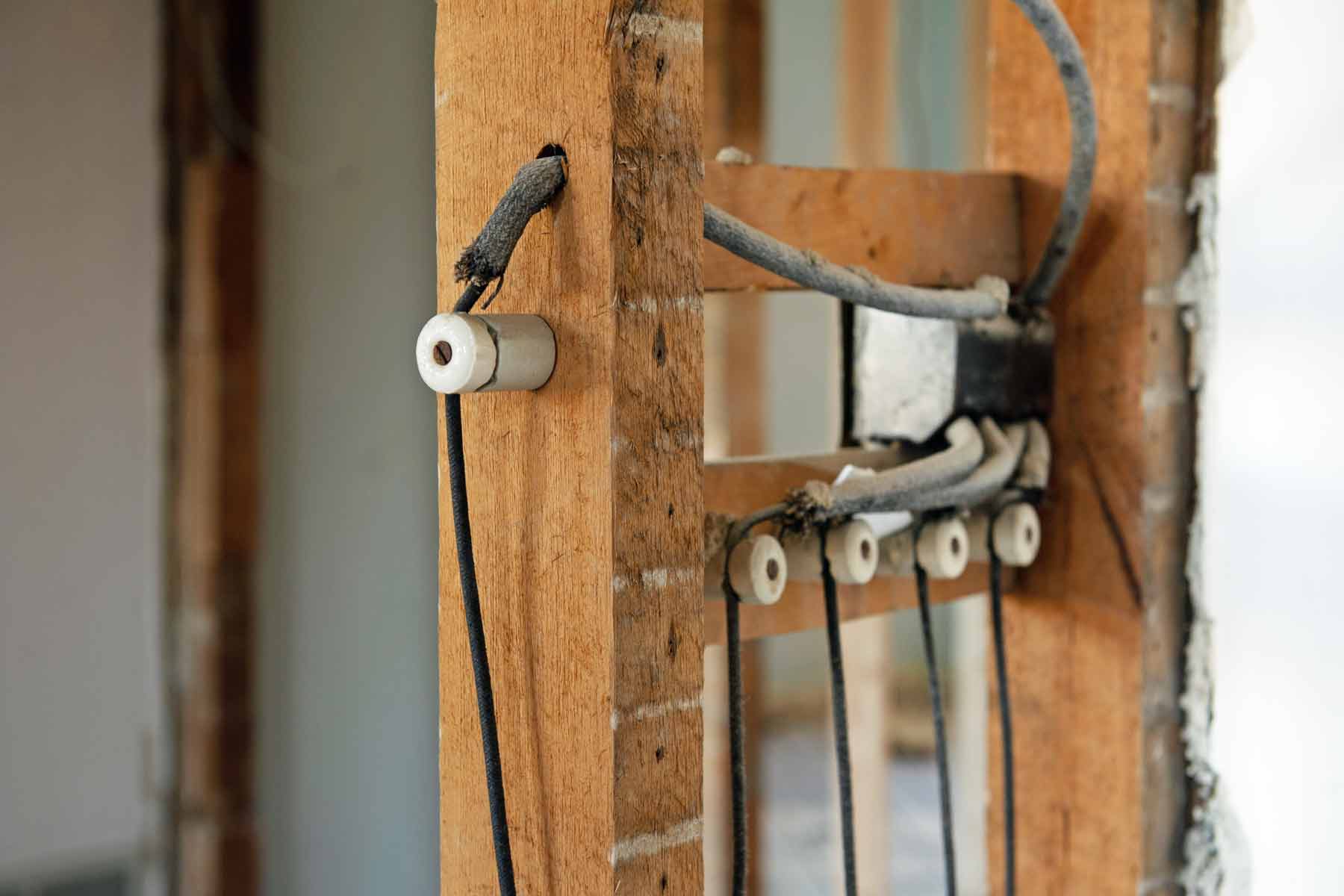
Does Your Home Still Have Knob and Tube Wiring?
Knob and tube wiring was the standard in homes built before the 1940s — and it worked fine for the electrical demands of that era. But today’s homes are a different story. Modern appliances, air conditioners, EV chargers, and smart home systems place demands on electrical systems that knob and tube simply wasn’t designed to handle.
What’s more, most knob and tube systems have been modified or spliced over the decades — often without permits or professional oversight. These informal changes can create hidden hazards that aren’t visible without a professional inspection.
Common problems we find in homes with knob and tube wiring:
- Overloaded circuits struggling with today’s electrical loads
- Hidden wire splices inside walls and ceilings
- Wiring buried under insulation, causing dangerous heat buildup
- Ungrounded outlets throughout the home
- DIY modifications completed without permits or inspections
- Insurance carriers requiring removal before issuing or renewing coverage
Signs Your Home's Wiring May Need Attention
If you notice any of the following in your home, it’s worth having a licensed electrician evaluate it. Identifying wiring problems early can prevent safety hazards and costlier repairs later on.
⚡ Flickering or Dimming Lights
If your lights dim or flicker when appliances run, your circuits are likely overloaded — a telltale symptom in homes still running on aging wiring systems that weren’t built for modern loads.
🔒 Two-Prong Outlets Throughout
Homes with only two-prong outlets lack grounding, which is required for safe operation of modern electronics. This almost always signals an outdated electrical system that needs upgrading.
🔥 Frequently Tripping Breakers
Breakers that trip repeatedly are warning you that electrical demand has outgrown your panel’s capacity — especially common when older homes are outfitted with newer appliances.
🔥 Warm Outlets or Switches
Outlets or switches that feel warm to the touch — or show scorch marks — can indicate loose wiring or overloaded circuits. This is a potential safety concern that warrants immediate professional evaluation.
📝 Your Insurer Is Asking Questions
Many Massachusetts insurance carriers now require removal of knob and tube wiring as a condition of coverage. We provide full documentation once work is inspected and complete, so you can satisfy your insurer’s requirements.
🔐 Burning Smell Near Outlets
A persistent burning odor near outlets, panels, or switches — even a faint one — should never be ignored. It may indicate wiring that is overheating and requires immediate attention from a licensed electrician.
What a Complete Rewiring Project Includes
When we complete a whole-home rewire, we don’t just replace old wires — we install a complete, modern electrical system built for how people actually live today, including heavy appliances, home offices, heat pumps, and EV charging. Every project is completed to current Massachusetts electrical code and inspected before closeout.
A typical rewiring project from our team includes:
- Complete removal of all existing knob and tube wiring
- Installation of modern grounded NM-B wiring throughout
- Code-compliant junction boxes and secure connections
- New dedicated circuits for kitchens, bathrooms, laundry, and home offices
- Updated outlets, switches, and covers across all rooms
- Panel inspection with upgrade recommendation or installation as needed
- Permitting and municipal electrical inspection coordination
- Final walkthrough and documentation for insurance compliance
We also proactively identify areas — like basements, workshops, and garages — that frequently need additional circuits later, so you can avoid a second project down the road.

Need more than a rewire? We handle whole-home generator installation and EV charger services as well — often in the same project visit.
Our Rewiring Process — Step by Step
Every rewiring project is unique — but our process is consistent: clear expectations up front, proper permits throughout, and workmanship that passes inspection the first time.
🔍
Step 1
Home Assessment
We inspect your full electrical system — locating knob and tube wiring, tracing existing circuits, and identifying what a modern rewire requires.
📄
Step 2
Detailed Estimate
You receive a clear, itemized estimate with the full scope of work explained honestly — no vague quotes, no hidden costs.
🕐
Step 3
Permits & Scheduling
We file permit applications and schedule around your availability, coordinating all required municipal electrical inspections.
🔧
Step 4
Rewiring Installation
Licensed electricians complete the rewire with care for your home — minimizing wall openings, protecting floors, and keeping the jobsite organized.
✅
Step 5
Inspection & Closeout
Once the work passes inspection, we provide full documentation for your insurance company and walk you through everything completed.
Upgrade Your Home While We're Already There
Since our electricians are already working throughout your home during a rewire, many homeowners choose to add complementary upgrades at the same time — often at a lower combined cost than scheduling them separately.
⚡
Electrical Panel Upgrade
A rewire is the ideal time to assess or upgrade your service panel. Adding capacity prepares your home for EV chargers, heat pumps, and future expansions without a second project.
🔋
Whole-Home Generator
Massachusetts winters can knock power out for days. Adding a standby generator during your rewire means the transfer switch wiring and load calculations are already being handled by the same team.
🚗
EV Charger Installation
Planning to drive electric? Adding a Level 2 EV charger during your rewire is one of the most cost-effective upgrades available — the dedicated circuit is already being run.
Frequently Asked Questions
How do I know if my home has knob and tube wiring?
Will my walls need to be opened?
How long does a whole-home rewire typically take?
Will we lose power during the project?
Can you provide documentation for my insurance company?
Do you handle the permits and inspections yourselves?
Ready to Get Started?
Schedule a no-obligation electrical assessment and find out exactly what your home needs. We’ll walk you through your options with a clear, honest estimate — no pressure.
- Licensed & fully insured electricians
- Proper permits and inspections handled
- Upfront pricing, clear scope of work
- Insurance documentation provided
- Serving Greater Boston area
Questions about panel upgrades or EV charger installation? We can discuss those at the same visit.
What Our Customers Say
★★★★★
“Akian handled our complete rewiring project with a level of professionalism I rarely see in contractors. They explained everything upfront, stayed exactly on schedule, and the city inspector passed on the first visit.”
— Greg, Watertown, MA
★★★★★
“I called four companies about my knob and tube situation. Akian was the only one that gave me a straight explanation of what needed to happen and why. The price was fair and the work was done exactly right.”
— Justin, Belmont, MA
★★★★★
“Very professional team. They were respectful of our home, communicated daily about progress, and helped us get our documentation ready for our insurance renewal. Couldn’t recommend them more highly.”
— Mara H., Newton, MA