
What Watertown Homeowners Should Do When a Water Heater Leaks
A leaking water heater can quickly turn into a bigger problem: water may spread across a basement floor, damage stored belongings, or reach nearby electrical equipment. If your water heater is leaking in Watertown, focus first on safety and limiting exposure. You do not need to diagnose the heater yourself. Note where you see water, keep clear of hazards, and contact a plumber to identify the source.
Need help deciding what to do? Call Akian Plumbing at (617) 458-8189 or send the details through the request form below. A plumber can assess the leak and explain the next steps; the source and condition of the heater determine whether repair or replacement makes sense.
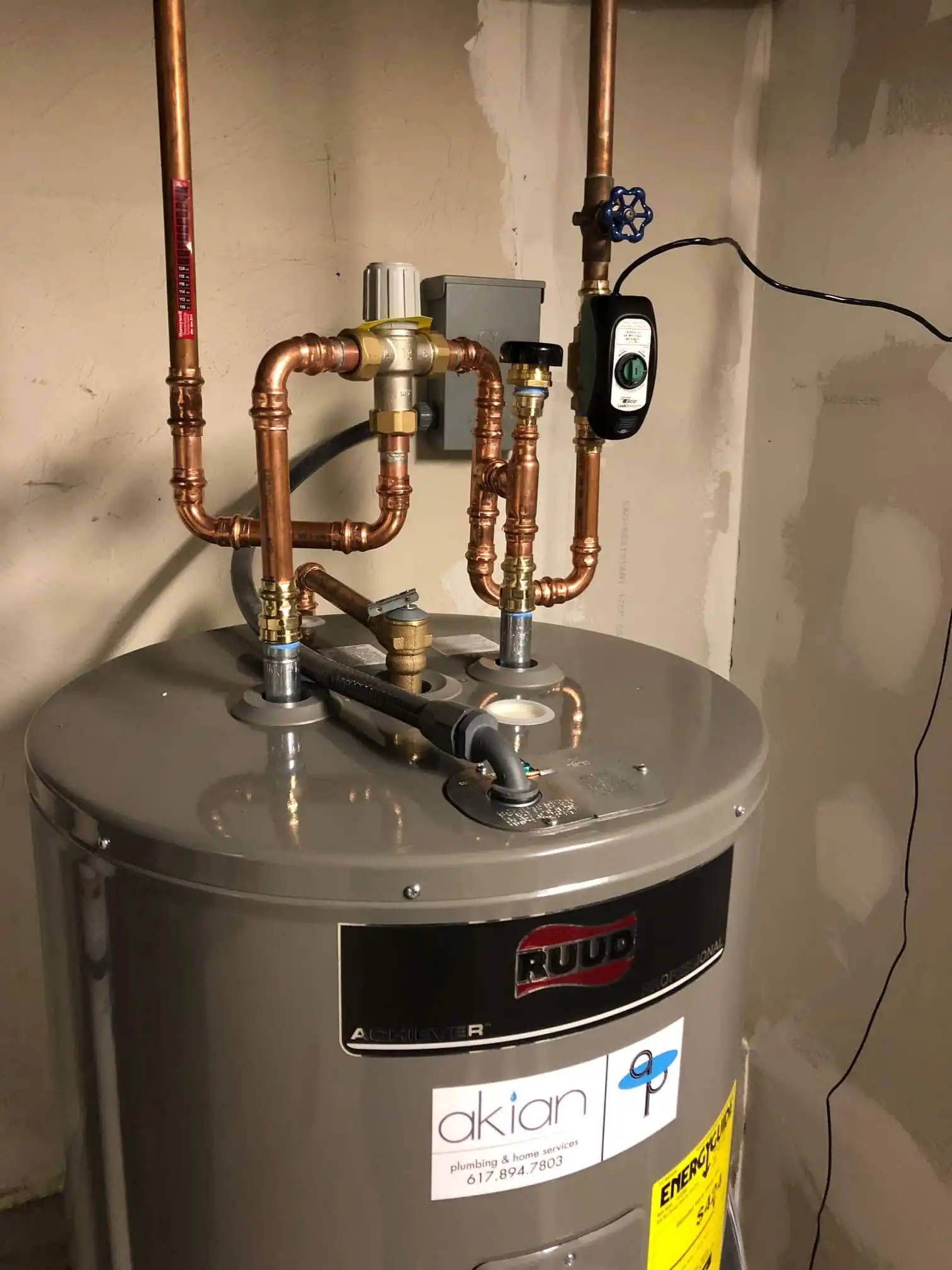
What to Do First When Your Water Heater Is Leaking
Use these steps to reduce risk while you arrange an assessment. If water is near an outlet, wiring, the heater’s electrical components, or a gas appliance, do not step into the water or touch the equipment.
- Keep people and pets away from the wet area. Treat standing water near electrical equipment as a potential shock hazard.
- Look from a safe distance. Notice whether the water appears near the top pipe connections, a side valve, the drain area, the base of the tank, or a nearby fixture. Water can run down the exterior, so the wettest spot may not be the source.
- Use a shutoff only if you can identify and reach it safely. Do not force a stuck valve, remove an access panel, or touch a control near standing water. If you are uncertain, leave it to a professional.
- Protect nearby belongings only if it is safe. Move stored items away from the water. Do not move the heater or place anything against hot pipes or the appliance.
- Take a photo and note the timing. A picture of the exterior and a note about whether the leak is steady or intermittent can help explain the issue when you call.
The U.S. Environmental Protection Agency recommends visually checking water heaters for leaks, corrosion, and aged or loose connections as part of home maintenance. See the EPA home maintenance guidance.
Request Water Heater Leak Service in Watertown
Tell us where the water is showing up, when you noticed it, and whether it is still spreading. Share the heater type if you know it, but do not remove a cover or reach behind the unit to find a label. Akian provides water heater repair and installation in Watertown and nearby communities.

Where Water Heater Leaks Commonly Appear
A puddle near a heater does not by itself prove that the tank has failed. The location can offer a clue, but a plumber should confirm the cause before anyone recommends a repair or new equipment.
Water around the top connections
Moisture near the pipes entering the heater may come from a fitting or nearby plumbing. Water can travel along a pipe or the unit’s outer jacket, so avoid tightening connections yourself. A plumber can inspect the fittings and trace the water back to its source.
Dripping near a valve or discharge pipe
If you see water near a valve or discharge pipe, describe exactly where it appears and whether it is continuous. Do not cap, plug, or block a discharge pipe, and do not adjust a relief valve. These components need to remain able to operate as designed.
Water at the base or underneath the tank
Water at the bottom could have traveled from above, come from a drain connection, or involve the tank itself. If the tank body is corroded or leaking, replacement may be discussed after inspection. The puddle alone is not enough to determine which explanation is correct.
Moisture that comes and goes
An intermittent leak can be easy to overlook. Note when it appears, how much water you see, and whether you notice it after hot-water use. Those observations can help the plumber narrow down what to inspect without requiring you to open or operate the equipment.
When a Leaking Water Heater Needs Prompt Attention
Contact a plumber promptly when water is actively spreading, the leak is getting worse, you see corrosion, or you cannot identify a safe way to limit the water. Keep clear if the water reaches electrical equipment or if the appliance appears damaged. If you smell gas, leave the building without operating switches or using a phone inside, then call 911 or your gas utility from outside. Follow Massachusetts gas-leak safety instructions.
If you can safely do so, take a photo from outside the wet area and tell the plumber whether the water is a slow drip, a steady flow, or a puddle that returns. Do not delay leaving the building if you suspect a gas leak or another immediate danger.
Can a Leaking Water Heater Be Repaired, or Does It Need Replacement?
It depends on what is leaking. A connection or replaceable component may be repairable. A leak from the tank itself, significant corrosion, or other equipment concerns may lead the plumber to discuss replacement. The right recommendation depends on the confirmed source, the unit’s condition, and the available repair and replacement options.
Ask the plumber to explain where the leak starts, what the proposed work addresses, and whether any related piping or safety components need attention. If replacement is recommended, ask what type of heater is being proposed, what installation work is included, and what warranty information applies. The U.S. Department of Energy’s overview of residential water heater types can help you prepare questions about tank, tankless, and heat-pump options.
Akian’s residential plumbing services include water heater work. The leak detection service page explains how a plumber can investigate a suspected leak elsewhere in the plumbing system.
What to Expect When You Contact a Plumber
When you call or submit the form, share your Watertown address, whether the heater is tank or tankless if you know, where the water appears, when you noticed it, and whether it is actively spreading. Mention any visible corrosion, unusual sounds, or safety concerns. A plumber can use those details to discuss the appropriate next step and inspect the heater and nearby connections.
During an assessment, ask for a clear explanation of the source and the options available. If a repair is proposed, ask what it includes. If replacement is proposed, ask what equipment and installation work are included and whether there are choices for your home. You can also review Akian’s contact page for other ways to reach the team.
Frequently Asked Questions About a Leaking Water Heater
Can I keep using a water heater that is leaking?
A visible leak should be assessed rather than ignored. If water is near electrical equipment, spreading quickly, or accompanied by a gas smell, keep clear and follow the safety steps above. Contact a plumber to discuss the leak and inspection.
What should I do if my water heater is leaking from the bottom?
Keep clear of standing water and note whether it is actively spreading. Water at the base may have traveled from a connection above or may involve the tank. The location alone does not confirm the cause, so ask a plumber to inspect it.
Should I shut off the water to a leaking water heater?
Only use a clearly identified shutoff if you can reach and operate it safely. Do not force a stuck or unfamiliar valve, and do not approach one through water near electrical equipment. If you are unsure, keep clear and contact a plumber.
Does a leaking water heater always need replacement?
No. A connection or component may be repairable. If the tank itself is leaking or the equipment has other significant concerns, a plumber may discuss replacement after confirming the source and condition.
What information should I give the plumber?
Share your Watertown address, heater type if known, where the water appears, when you noticed it, and whether the leak is steady or intermittent. A photo of the exterior can also help explain what you see.
What if I smell gas near my water heater?
Leave the building without operating switches or using a phone inside. From outside, call 911 or your gas utility and follow the Massachusetts gas safety instructions.
Get Help With a Leaking Water Heater in Watertown
If water is pooling near your heater, you do not have to guess whether the tank or a connection is responsible. Describe what you see and request an assessment from Akian Plumbing, Heating, Cooling & Electric.
Call (617) 458-8189 or complete the request form above. Akian’s team can review the details and explain the next step.